



Chicken Pad Thai ready in 30 minutes with bold flavors and 40g protein per serving. A fast, satisfying weeknight meal the whole family will love.
Okay, so the first time I made chicken pad thai at home, I was convinced it would be a total disaster. I'd only ever eaten it at restaurants and figured the sauce alone would require some kind of culinary degree. Spoiler: it didn't! One chaotic Tuesday night, I threw this together with stuff already in my pantry, and honestly, my family lost their minds over it. Now it's our most-requested weeknight dinner, no question.
Oops okay, I have to tell you about the time I accidentally doubled the fish sauce. I didn't expect that one small mistake to make the whole kitchen smell like low tide! My husband walked in, made a face, and slowly backed out. I ended up adding extra brown sugar and a squeeze of lime to balance it out, and shockingly? It still worked. Lesson learned: measure everything first!
Chicken Pad Thai: Ingredients You'll Need Tonight
- 8 oz flat rice noodles (medium width): These noodles are the backbone of the whole dish, and honestly, width matters more than you'd think! Medium-width flat rice noodles soak up the sauce without turning to mush, and they've got that satisfying chew that makes chicken pad thai so craveable. I've tried thin vermicelli in a pinch it works, but it's just not the same. Soak them in room-temp water, not boiling, and you'll thank yourself later.
- 1 lb boneless skinless chicken breast, thinly sliced: Thinly sliced is the key phrase here don't skip that step! I used to just chop mine into chunks and wonder why it was chewy. Slicing it thin means it cooks fast and stays juicy. Pop the chicken breast in the freezer for about 15 minutes before slicing and it becomes SO much easier to get those clean, even pieces. Game changer, I promise.
- 3 large eggs: Eggs in chicken pad thai are not an afterthought they're a whole vibe. They add richness, extra protein, and that slightly creamy texture that ties everything together. I scramble mine right in the wok alongside everything else, and I've learned not to overcook them. You want them just set, still a little soft. Rubbery eggs are a crime and I will not be taking questions.
- 3 tbsp tamarind paste: This is the ingredient that makes chicken pad thai taste like chicken pad thai and not just some random noodle dish. Tamarind brings that signature tangy, slightly fruity depth that you just can't fake. I was intimidated by it for years, to be real, but now I keep a jar in my fridge at all times. Find it at any Asian grocery store or online it's worth the hunt.
- 3 tbsp fish sauce: Fish sauce smells wild straight from the bottle I won't lie to you. But once it hits the heat and mixes with the other sauce ingredients, it transforms into pure umami magic. It's the salty backbone of the whole dish. Please, please measure it carefully (see my anecdote above for why). A little goes a long way, and the right amount makes everything taste deeply savory and complex.
- 4 cloves garlic, minced: Fresh garlic, always. I've used the pre-minced stuff from a jar in desperate moments and it just doesn't hit the same way. Four cloves sounds like a lot, but once it hits that hot oil and gets all golden and fragrant, it becomes the aromatic foundation of the whole stir-fry. Your kitchen will smell absolutely incredible. Fair warning: your neighbors might knock on the door.
How to Make Chicken Pad Thai Step by Step
- Step 1: Soak the Noodles:
- This step is so easy and so important, and yet I ignored it the first time I made chicken pad thai big mistake. Just submerge your flat rice noodles in a bowl of room-temperature water and let them soak for about 30 minutes until they're pliable but still have a little bite. They'll finish cooking in the wok, so don't over-soak them or they'll turn to mush. I usually start this step before I even chop anything else. Think of it as giving your noodles a little spa moment before the chaos begins.
- Step 2: Mix the Sauce:
- Honestly, this is my favorite part of making chicken pad thai because the moment you whisk together the tamarind paste, fish sauce, brown sugar, soy sauce, and sriracha, you get this gorgeous, deep amber sauce that smells tangy and savory and a little sweet all at once. Mix it in a small bowl ahead of time so you're not scrambling to measure things mid-cook stir-frying moves fast! Taste it and adjust. Want more heat? Add a touch more sriracha. More tang? A little extra tamarind. Make it yours.
- Step 3: Cook the Chicken:
- Get your wok or large skillet screaming hot before the chicken goes in this is non-negotiable. Add your vegetable oil, let it shimmer, then lay those thinly sliced chicken pieces in a single layer. Don't touch them for a minute! Let them get a little golden. When I first started making chicken pad thai, I was constantly stirring and the chicken just steamed instead of searing. Now I know better. Cook until just done through, then push it to the side of the pan. It takes maybe 4-5 minutes and the smell is incredible.
- Step 4: Scramble the Eggs:
- With the chicken pushed to the side, crack your three eggs right into the center of the hot wok. Let them sit for just a second you'll see the edges start to set then gently scramble them with your spatula, breaking them into soft, pillowy curds. I didn't expect how much I'd love this step. There's something so satisfying about watching the eggs cook right there with everything else. Don't overcook them! Pull them off the heat while they're still slightly glossy and soft. They'll keep cooking from residual heat.
- Step 5: Add Aromatics and Noodles:
- Now things get exciting! Toss in your minced garlic and let it sizzle for about 30 seconds just until fragrant, not burned. Then drain your soaked noodles and add them straight to the wok along with all that gorgeous sauce you mixed earlier. This is the moment chicken pad thai really comes together. Use tongs or two spatulas to toss everything, making sure every noodle gets coated in that deep, tangy sauce. The noodles will soak it up fast and start to caramelize slightly at the edges. That smell? Absolutely wild in the best way.
- Step 6: Toss in Vegetables:
- This step is where you can really make the dish your own. I usually throw in bean sprouts and sliced green onions here they only need about a minute of heat so they stay crisp and fresh. Toss everything together one more time, making sure the chicken, eggs, noodles, and vegetables are all evenly distributed. I love this moment because the wok is just a gorgeous, colorful, fragrant mess of everything good. Taste it one more time and adjust the seasoning if needed. A tiny splash more fish sauce or a pinch of sugar can make all the difference.
There's something almost meditative about making this dish now that I've done it so many times. The sizzle when the chicken hits the hot oil, the smell of garlic blooming, the way the sauce darkens and clings to every noodle it's just such a satisfying cooking experience. Even on my most exhausted weeknights, standing at that wok for 20 minutes genuinely recharges me. Weird but true!
Storage Tips for Leftover Chicken Pad Thai
Okay, real talk chicken pad thai stores better than you'd expect, but there are a few things I've learned the hard way. Let it cool completely before packing it into an airtight container, and it'll keep in the fridge for up to 3 days. When reheating, add a tiny splash of water like a tablespoon before microwaving or tossing it back in a hot skillet. This keeps the noodles from drying out and clumping. I once reheated it straight from the fridge with no added moisture and ended up with a sad, rubbery brick. Don't be like past me! I don't recommend freezing it the noodles get weirdly soft and the texture just isn't the same after thawing. Fresh is best, but day-two leftovers are genuinely delicious.

Easy Ingredient Swaps for Chicken Pad Thai
I've experimented with this recipe a lot, and here's what I've found actually works. If you can't find tamarind paste, a mix of lime juice and a little Worcestershire sauce gets you surprisingly close not identical, but totally respectable. For a gluten-free version, swap the soy sauce for tamari. No fish sauce? Coconut aminos work in a pinch, though the flavor is milder. To be real, I've also made this with shrimp and tofu instead of chicken, and both are fantastic just adjust your cook times. If sriracha isn't your thing, skip it or use a tiny pinch of red pepper flakes instead. Brown sugar can be swapped for honey or coconut sugar with great results. This recipe is honestly pretty forgiving once you nail the core sauce ratios.
Serving Chicken Pad Thai Like a Pro
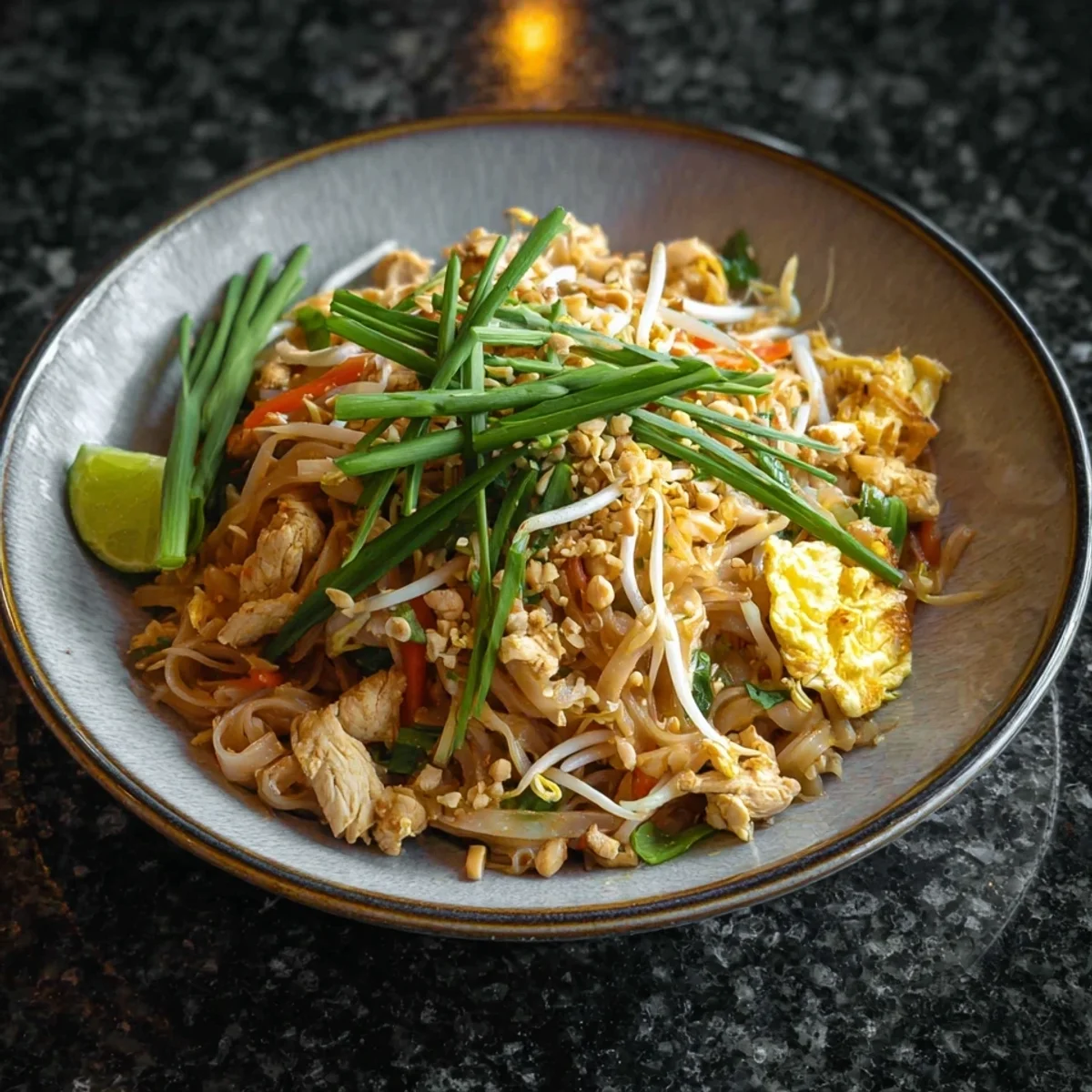
My favorite way to serve this is straight from the wok into big shallow bowls, piled high with toppings. I always set out a little garnish station crushed roasted peanuts, fresh lime wedges, sliced green onions, extra bean sprouts, and a small dish of chili flakes. Let everyone customize their own bowl! It makes dinner feel a little festive even on a Tuesday. For a full spread, I love pairing this with a simple Thai cucumber salad on the side the cool, crisp crunch is such a nice contrast to the warm, savory noodles. A cold Thai iced tea or even just sparkling water with lime is the perfect drink pairing. If you're hosting, this dish looks gorgeous on a big platter with all the garnishes arranged around it.
The Cultural Backstory of Chicken Pad Thai
Chicken pad thai has a fascinating history that I only discovered after making it at home obsessively for years. The dish actually became popular in Thailand during the 1940s as part of a government campaign to promote national identity and reduce rice consumption during a shortage. Street food vendors began selling it widely, and it quickly became one of Thailand's most iconic dishes. To be real, I feel a little humbled knowing that what I throw together on a weeknight has such deep cultural roots. Traditional pad thai is made in a screaming-hot wok over open flame the so-called 'wok hei' or breath of the wok which gives it that slightly smoky flavor. Home stoves can't fully replicate that, but getting your pan as hot as possible gets you pretty close. I have so much respect for the street vendors who've perfected this dish over generations.
If you make this recipe, I genuinely hope it becomes a weeknight staple in your house the way it has in mine. There's something so special about a dish that's fast, satisfying, and just a little bit impressive. Drop a comment below and tell me how it went did you make any fun swaps? Did your family lose their minds? I want to hear everything!

Frequently Asked Questions about Chicken Pad Thai
- → Can I make chicken pad thai ahead of time?
You can prep the sauce and soak the noodles ahead of time, which makes weeknight cooking a breeze. I'd cook it fresh though the noodles texture is best right out of the wok. If you must make it ahead, store it properly and add a splash of water when reheating.
- → What if I can't find tamarind paste at my grocery store?
Check the international aisle first it's often hiding there! Asian grocery stores almost always carry it. In a real pinch, mix 2 tablespoons of lime juice with 1 tablespoon of Worcestershire sauce. It's not a perfect swap but it gets you that tangy, slightly fruity depth the sauce needs.
- → Is this recipe spicy?
With just 1 teaspoon of sriracha, it's got a mild background warmth nothing overwhelming. My kids eat it without complaint! If you love heat, add more sriracha or serve with chili flakes on the side so everyone can dial up their own spice level.
- → Can I use chicken thighs instead of chicken breast?
Honestly, chicken thighs are even better here they're juicier and more forgiving if you accidentally overcook them a little. Just slice them thin the same way and cook over high heat. The extra fat content adds a little richness to the dish that I personally love.
- → Why are my noodles clumping together?
This usually means they were over-soaked or the wok wasn't hot enough when they went in. Make sure your noodles are pliable but still firm before adding them, and get that wok ripping hot first. Toss everything quickly and constantly once the noodles hit the pan to keep them moving.
Quick Chicken Pad Thai: High-Protein Weeknight Dinner
Chicken Pad Thai ready in 30 minutes with bold flavors and 40g protein per serving. A fast, satisfying weeknight meal the whole family will love.
Ingredients
Silky Rice Noodle Base
- 8 oz flat rice noodles (medium width)
- 1 lb boneless skinless chicken breast, thinly sliced
- 3 large eggs
- 2 tbsp vegetable oil
Sticky Tamarind Sauce
- 3 tbsp tamarind paste
- 3 tbsp fish sauce
- 2 tbsp brown sugar
- 1 tbsp soy sauce
- 1 tsp sriracha
Fresh Aromatics & Vegetables
- 4 cloves garlic, minced
- 3 green onions, cut into 1-inch pieces
- 1 cup bean sprouts
- 1/2 cup shredded carrots
Crunchy Finishing Toppings
- 1/2 cup roasted unsalted peanuts, roughly chopped
- 1 lime, cut into wedges
- 1/4 cup fresh cilantro leaves
- 1/2 tsp red pepper flakes
Instructions
-
1Soak the NoodlesPlace 8 oz flat rice noodles in a large bowl and cover with warm water. Soak for 8-10 minutes until pliable but still slightly firm - they'll finish cooking in the wok. Drain and set aside. Properly soaked noodles are the foundation of a great Quick Chicken Pad Thai: Protein-Packed Weeknight Dinner.
-
2Mix the SauceIn a small bowl, whisk together 3 tbsp tamarind paste, 3 tbsp fish sauce, 2 tbsp brown sugar, 1 tbsp soy sauce, and 1 tsp sriracha until the sugar fully dissolves. Taste and adjust heat or sweetness as needed. Set the sauce aside - it comes together fast once cooking starts.
-
3Cook the ChickenHeat 1 tbsp vegetable oil in a large wok or skillet over high heat until shimmering. Add 1 lb thinly sliced chicken breast in a single layer and cook undisturbed for 2 minutes, then stir-fry for another 2-3 minutes until cooked through and lightly golden. Push chicken to one side of the wok.
-
4Scramble the EggsAdd the remaining 1 tbsp vegetable oil to the empty side of the wok. Crack in 3 large eggs and scramble them quickly with a spatula for about 1 minute until just set but still slightly soft. Stir the eggs into the chicken, combining everything together before the next step.
-
5Add Aromatics and NoodlesAdd 4 cloves minced garlic, 1/2 cup shredded carrots, and the drained rice noodles to the wok. Pour the prepared tamarind sauce over everything. Toss and stir-fry vigorously for 2-3 minutes, ensuring the noodles absorb the sauce evenly. This is where your Quick Chicken Pad Thai: Protein-Packed Weeknight Dinner really comes to life.
-
6Toss in VegetablesAdd 1 cup bean sprouts and 3 green onions cut into 1-inch pieces to the wok. Stir-fry for 1-2 minutes, keeping the sprouts slightly crisp for texture. Avoid overcooking - the fresh crunch of the vegetables is what makes this Quick Chicken Pad Thai: Protein-Packed Weeknight Dinner feel vibrant and restaurant-quality.
-
7Plate and GarnishDivide the Pad Thai evenly among 4 plates or bowls. Top each serving with 1/2 cup roughly chopped roasted peanuts, fresh cilantro leaves, and a pinch of red pepper flakes. Serve immediately with lime wedges on the side for squeezing over the top - that hit of citrus brightens every bite of this Quick Chicken Pad Thai: Protein-Packed Weeknight Dinner.
Notes
🔥 Wok tip: High heat is essential for authentic Pad Thai flavor. If your pan isn't hot enough, the noodles will steam instead of stir-fry. A cast iron skillet works well if you don't have a wok — just preheat it thoroughly before adding oil.
🧊 Storage advice: Store leftovers in an airtight container in the refrigerator for up to 3 days. Reheat in a skillet over medium heat with a splash of water to loosen the noodles. Avoid microwaving if possible, as it can make the noodles gummy.
🔄 Substitution tips: No tamarind paste? Mix 2 tbsp lime juice with 1 tbsp brown sugar as a quick swap. You can also replace chicken with shrimp, tofu, or thinly sliced beef. For a gluten-free version, ensure your soy sauce is certified gluten-free or use tamari.
🍽️ Serving suggestion: Set out small bowls of extra peanuts, lime wedges, red pepper flakes, and fish sauce at the table so everyone can customize their own bowl. A side of Thai cucumber salad or a simple miso soup rounds out the meal beautifully.
Equipment
Please check ingredients for potential allergens and consult a health professional if in doubt.
Nutrition Facts
It is important to consider this information as approximate and not to use it as definitive health advice.
Comments
Leave a Comment