



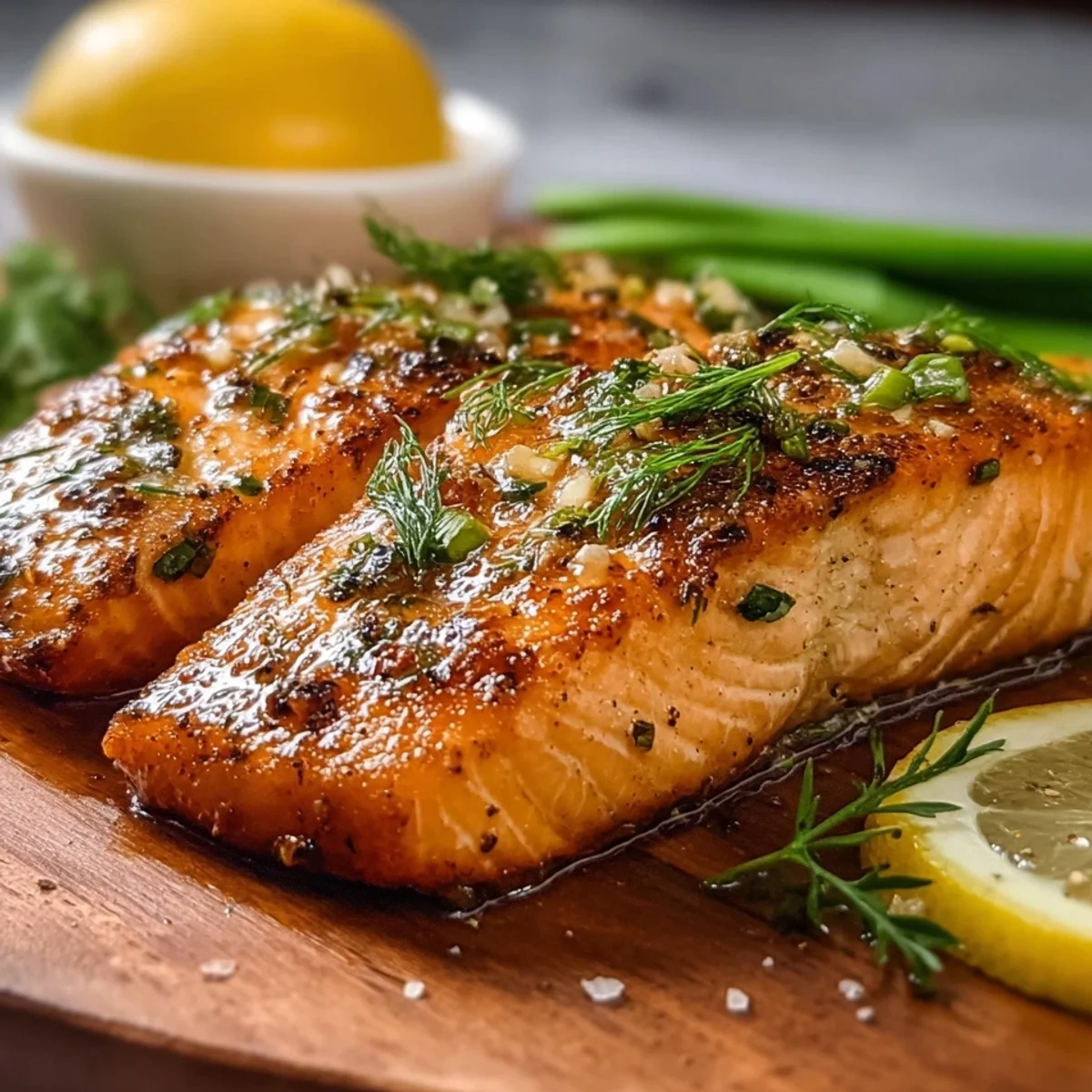
Texas Roadhouse salmon made at home in 25 minutes. Seasoned, pan-seared, and restaurant-quality with simple ingredients.
Okay, so picture this I'm sitting at Texas Roadhouse with my sister, and I order the salmon on a whim. One bite and I'm completely gone. Like, where has this been my whole life?! I spent the next two weekends reverse-engineering it in my tiny apartment kitchen, burning one fillet and oversalting another. But honestly? The third try cracked it wide open. Now I make Texas Roadhouse salmon at least twice a month and my family thinks I've gone full chef.
Oops moment of the century: I once forgot to pat the salmon dry before searing. The whole pan basically turned into a steam bath, the skin went completely soggy, and I may have said some words my neighbors definitely heard. I didn't expect that one tablespoon of surface moisture could cause such chaos! Lesson learned paper towels are not optional. They are sacred.
Texas Roadhouse Salmon: Ingredients You'll Need
- 2 salmon fillets (6 oz each, skin-on): The skin-on fillet is non-negotiable here, friends. That skin crisps up into this gorgeous, crackly layer that honestly makes the whole Texas Roadhouse salmon experience sing. Go for center-cut fillets if you can they cook more evenly and look way prettier on the plate. I always grab mine fresh from the fish counter, but thawed frozen fillets work great too as long as you dry them really, really well.
- 1 tbsp olive oil: Olive oil is your heat conductor here, helping the spice crust make full contact with the pan without burning too fast. I use a light olive oil rather than extra virgin for high-heat searing extra virgin can get a little bitter when it gets screaming hot. Just a tablespoon is all you need, you want a thin, even coat in the pan. More than that and you're basically shallow-frying, which isn't the vibe we're going for.
- 1 tsp smoked paprika: This is the soul of the spice blend smoked paprika brings that deep, woodsy warmth that makes you feel like the salmon just came off a real grill. I went through three different brands before landing on one I loved. Spanish smoked paprika is my personal favorite, it's got this rich, almost earthy quality that regular paprika just can't touch. Don't skip it, don't substitute sweet paprika this one ingredient carries serious flavor weight.
- 1 tsp brown sugar: Brown sugar in a savory spice rub sounds weird, I know! I raised an eyebrow too the first time. But this tiny teaspoon is what creates that gorgeous caramelized crust when it hits the hot pan. It balances the cayenne heat and the smokiness in a way that just makes everything click. Light or dark brown sugar both work dark will give you a slightly deeper molasses note, which I honestly love on salmon.
- 1/4 tsp cayenne pepper: Just a quarter teaspoon keeps things exciting without setting anyone's mouth on fire. I once accidentally doubled it to be real, my eyes were watering and my husband was gulping water so measure carefully! This little pinch of heat is what gives Texas Roadhouse salmon its signature kick. If you're cooking for heat-sensitive folks, you can dial it back to just a tiny pinch and it'll still be delicious.
- 2 tbsp unsalted butter: This is the finishing move, the chef's kiss, the whole reason the dish tastes restaurant-quality. Unsalted butter lets you control the salt level yourself, and when it melts over that hot, just-cooked salmon, it creates this glossy, rich sauce that pools around the fillet beautifully. I sometimes add a tiny squeeze of lemon right into the melting butter game changer. Don't use margarine. Please. I'm begging you.
How to Make Texas Roadhouse Salmon Step by Step
- Step 1: Prep Your Salmon:
- This step is where I used to rush and totally regret it. Pull your fillets out of the fridge about 10 minutes before cooking cold fish straight into a hot pan is a recipe for uneven cooking. Then, and I cannot stress this enough, pat them completely dry with paper towels. Both sides. The skin too. Moisture is the enemy of a good sear. When your fish is dry, your Texas Roadhouse salmon crust will form perfectly instead of steaming into sadness.
- Step 2: Mix the Spice Crust:
- Grab a small bowl and combine your salt, black pepper, smoked paprika, garlic powder, onion powder, cayenne, and brown sugar. Give it a good stir and just... smell it. Honestly, this spice blend smells incredible even before it hits the heat smoky, a little sweet, with that sneaky warmth from the cayenne. I always make a double batch of this rub and keep it in a jar because it works on chicken and shrimp too. But on Texas Roadhouse salmon? It's absolutely magical.
- Step 3: Season the Fillets:
- Drizzle your olive oil over both fillets and rub it in gently you want every surface lightly coated. Then press that spice blend onto the flesh side generously. Don't be shy! Press it in with your fingers so it really adheres. I used to just sprinkle it on top and wonder why the crust wasn't as bold. Pressing it in is the move. Leave the skin side mostly plain it'll crisp up better without all that sugar directly on it.
- Step 4: Sear Skin Side Down:
- Heat your skillet over medium-high until it's genuinely hot a drop of water should sizzle and evaporate immediately. Add your olive oil, let it shimmer, then lay the fillets skin-side down. And then don't touch them! I know, it's hard. You'll want to peek and poke. Resist. Let the skin get golden and crispy for about 4-5 minutes. You'll see the flesh start turning opaque from the bottom up. That's how you know your Texas Roadhouse salmon is building that perfect restaurant-style sear.
- Step 5: Flip and Finish:
- Okay, flip time! Use a thin spatula and slide it under the skin carefully. The fillet should release easily if it's sticking, it's not ready yet. Give it another 30 seconds. Once flipped, cook the flesh side for just 2-3 minutes depending on thickness. You want the center to be just barely opaque slightly translucent in the very middle is perfect. Overcooked salmon is dry and sad, and we are not doing dry and sad today. This Texas Roadhouse salmon deserves better!
- Step 6: Build the Herb Butter:
- Pull the pan off the heat and drop in your two tablespoons of butter. Watch it melt and foam around the fillets it smells absolutely incredible at this point, like a fancy restaurant kitchen. Tilt the pan slightly and use a spoon to baste the butter over the top of the fish repeatedly. This is called arroser in fancy chef speak, but I just call it 'the part where everything gets delicious.' Let the fillets rest in that butter for a full minute before plating.
Every time I make this, my kitchen fills up with this smoky, buttery, paprika-scented cloud that makes everyone wander in asking what's for dinner. There's something so satisfying about hearing that sizzle when the fish hits the pan it's like the skillet is applauding your life choices. This recipe made me fall in love with cooking salmon at home, and I genuinely don't think I'll ever go back to baking it.
Storage Tips for Your Texas Roadhouse Salmon Leftovers
Okay, real talk salmon is best eaten fresh, like right off the pan. But life happens! Store any leftovers in an airtight container in the fridge for up to 2 days. I made the mistake once of storing it uncovered and it dried out completely and also made my fridge smell like a fishing boat for three days. Not fun. When reheating, skip the microwave it makes the texture rubbery and sad. Instead, warm it gently in a skillet over low heat with a tiny splash of water or a little extra butter. You can also flake cold leftover Texas Roadhouse salmon over a salad or into scrambled eggs the next morning, which is honestly a next-level breakfast move I stumbled onto completely by accident.

Easy Ingredient Swaps for Texas Roadhouse Salmon
No smoked paprika? Regular paprika works in a pinch, but add a tiny drop of liquid smoke to your butter at the end to get some of that depth back. Out of brown sugar? White sugar or even a little honey brushed on will still give you caramelization. I've also swapped the salmon fillets for steelhead trout when my grocery store was out, and honestly? It's incredible very similar texture and flavor profile. For a dairy-free version, I've used vegan butter and it melted beautifully with no weird aftertaste. Avocado oil is a great swap for olive oil if that's what you've got on hand it has a high smoke point and stays neutral in flavor, which works perfectly for this Texas Roadhouse salmon spice crust.
Serving Texas Roadhouse Salmon Like a Pro
This dish plays so well with others! My absolute favorite pairing is a big pile of garlic mashed potatoes they soak up that herb butter like a dream. Roasted asparagus or green beans with a squeeze of lemon are perfect alongside because the brightness cuts through the richness of the fish. For a lighter meal, I'll serve it over a simple arugula salad with shaved parmesan and a lemon vinaigrette. Crusty bread on the side is never a bad idea either you'll want something to mop up every last drop of that butter sauce. When I'm feeling fancy, I'll add a wedge of lemon and a little sprinkle of fresh parsley on top, and suddenly my Tuesday night dinner looks like something from a food magazine.
The Delicious Backstory Behind Texas Roadhouse Salmon
Texas Roadhouse is an American chain restaurant that's built its whole identity around bold flavors, generous portions, and that warm, come-as-you-are Southern hospitality. Their salmon dish captures that spirit perfectly it's not fussy or pretentious, just really well-seasoned, satisfying food. The blackened-style spice rub has deep roots in Cajun and Creole cooking traditions from Louisiana, where coating fish in bold spices before cooking in a screaming-hot skillet was practically an art form. I love that this home version of Texas Roadhouse salmon connects that rich culinary tradition to my own weeknight dinner table. It's a reminder that great food doesn't need to be complicated it just needs the right spices, good technique, and a little love. That's something I think about every single time I make this dish.
I hope this recipe brings as much joy to your kitchen as it has to mine! Texas Roadhouse salmon went from a restaurant craving to one of my most-made weeknight dinners, and I genuinely can't imagine my recipe rotation without it. Give it a try, make it your own, and please come back and tell me how it went! Drop a comment below, I read every single one and I love hearing your kitchen stories.

Frequently Asked Questions about Texas Roadhouse Salmon
- → Can I use skinless salmon fillets for this recipe?
You can, but honestly you'll miss out on that incredible crispy skin situation. If you go skinless, reduce your sear time by about a minute on the first side and watch it carefully skinless fillets can overcook faster and they're a little more delicate to flip without falling apart.
- → What's the best pan to use for Texas Roadhouse salmon?
Cast iron is my ride-or-die for this recipe it holds heat evenly and gives you the most beautiful sear. A heavy stainless steel skillet works great too. I'd avoid non-stick for this one because it doesn't get hot enough to build that gorgeous crust we're after.
- → How do I know when the salmon is cooked through?
The flesh should flake easily with a fork and look opaque throughout, but a slightly translucent center is totally fine that's actually ideal! If you want to be precise, an internal temperature of 125-130°F for medium or 145°F for fully cooked is what you're aiming for.
- → Can I make the spice rub ahead of time?
Yes, and I highly recommend it! Mix up a big batch and store it in a small jar with a tight lid. It keeps well for up to 3 months in your pantry. I use it on chicken, shrimp, and even roasted cauliflower. It's genuinely one of my most-used spice blends.
- → Is Texas Roadhouse salmon gluten-free?
Great news this home version is naturally gluten-free! Every ingredient in the spice blend and the butter finish contains no gluten. Just double-check your individual spice labels if you have a serious sensitivity, since some brands process in facilities with shared equipment.
Texas Roadhouse Salmon Recipe at Home
Texas Roadhouse salmon made at home in 25 minutes. Seasoned, pan-seared, and restaurant-quality with simple ingredients.
Ingredients
Star of the Show
- 2 salmon fillets (6 oz each, skin-on)
- 1 tbsp olive oil
- 1/2 tsp salt
- 1/4 tsp black pepper
Smoky Spice Crust
- 1 tsp smoked paprika
- 1/2 tsp garlic powder
- 1/2 tsp onion powder
- 1/4 tsp cayenne pepper
- 1 tsp brown sugar
Buttery Herb Finish
- 2 tbsp unsalted butter
- 2 cloves garlic, minced
- 1 tbsp fresh parsley, chopped
- 1 tsp fresh thyme leaves
- 1 tbsp lemon juice
Bright Citrus Garnish
- 4 lemon wedges, for garnish
- 1 tbsp capers, drained
- 1/4 tsp red pepper flakes
Instructions
-
1Prep Your SalmonPat both 6 oz skin-on salmon fillets completely dry with paper towels - this is the secret to a perfect sear. Brush each fillet evenly with 1 tbsp olive oil on all sides, ensuring full coverage. Drying the fish guarantees that restaurant-quality crust every time.
-
2Mix the Spice CrustIn a small bowl, combine 1 tsp smoked paprika, 1/2 tsp garlic powder, 1/2 tsp onion powder, 1/4 tsp cayenne pepper, 1 tsp brown sugar, 1/2 tsp salt, and 1/4 tsp black pepper. Stir until fully blended. This smoky-sweet spice rub is what gives Texas Roadhouse Salmon: Quick & Restaurant-Quality Meal its bold, signature flavor.
-
3Season the FilletsPress the spice mixture firmly onto the flesh side of each salmon fillet, coating generously and evenly. Season your Texas Roadhouse Salmon: Quick & Restaurant-Quality Meal right before cooking so the brown sugar caramelizes beautifully in the pan rather than drawing out moisture prematurely.
-
4Sear Skin Side DownHeat a cast-iron or stainless steel skillet over medium-high heat until very hot. Place the salmon fillets skin-side down and press gently with a spatula for 10 seconds. Cook undisturbed for 5–6 minutes until the skin is crispy and the flesh turns opaque halfway up the sides.
-
5Flip and FinishCarefully flip each fillet to the spiced flesh side and cook for 2–3 more minutes until the crust is deeply caramelized and the internal temperature reaches 125–130°F for medium or 145°F for fully cooked. This two-stage sear is what makes Texas Roadhouse Salmon: Quick & Restaurant-Quality Meal truly shine.
-
6Build the Herb ButterReduce heat to medium-low. Add 2 tbsp unsalted butter and 2 cloves minced garlic to the pan. As the butter melts and foams, tilt the pan and spoon the garlic butter continuously over the salmon for 1 minute. Stir in 1 tbsp fresh parsley and 1 tsp fresh thyme leaves, then drizzle with 1 tbsp lemon juice.
-
7Rest and PlateTransfer the salmon to a warm plate and let it rest for 2 minutes - for the best Texas Roadhouse Salmon: Quick & Restaurant-Quality Meal, resting allows the juices to redistribute for a moist, flavorful bite. Spoon any remaining herb butter from the pan directly over each fillet before serving.
-
8Garnish and ServeFinish each plate with 1 tbsp drained capers and a pinch of 1/4 tsp red pepper flakes scattered over the top. Arrange 2 lemon wedges per plate on the side for squeezing. Serve immediately while the crust is still crispy and the herb butter is warm and fragrant.
Notes
🔥 Pro Searing Tip: Always start with a screaming-hot pan and completely dry salmon fillets. Any moisture on the surface will steam the fish instead of searing it, and you'll lose that gorgeous caramelized crust that defines this dish.
🧊 Storage Advice: Store leftover salmon in an airtight container in the refrigerator for up to 2 days. Reheat gently in a skillet over low heat with a small splash of water or extra butter — avoid the microwave, which can make the fish rubbery and dry.
🔄 Substitution Tips: No fresh herbs on hand? Use 1/2 tsp dried parsley and 1/4 tsp dried thyme instead. Skinless salmon fillets work fine too — just reduce the initial sear time by 1–2 minutes per side to avoid overcooking.
🍽️ Serving Suggestions: This dish pairs beautifully with garlic mashed potatoes, roasted asparagus, or a simple green salad. For a full steakhouse-style experience, serve alongside a loaded baked potato and a wedge salad with ranch dressing.
Equipment
Please check ingredients for potential allergens and consult a health professional if in doubt.
Nutrition Facts
It is important to consider this information as approximate and not to use it as definitive health advice.
Comments
Leave a Comment