



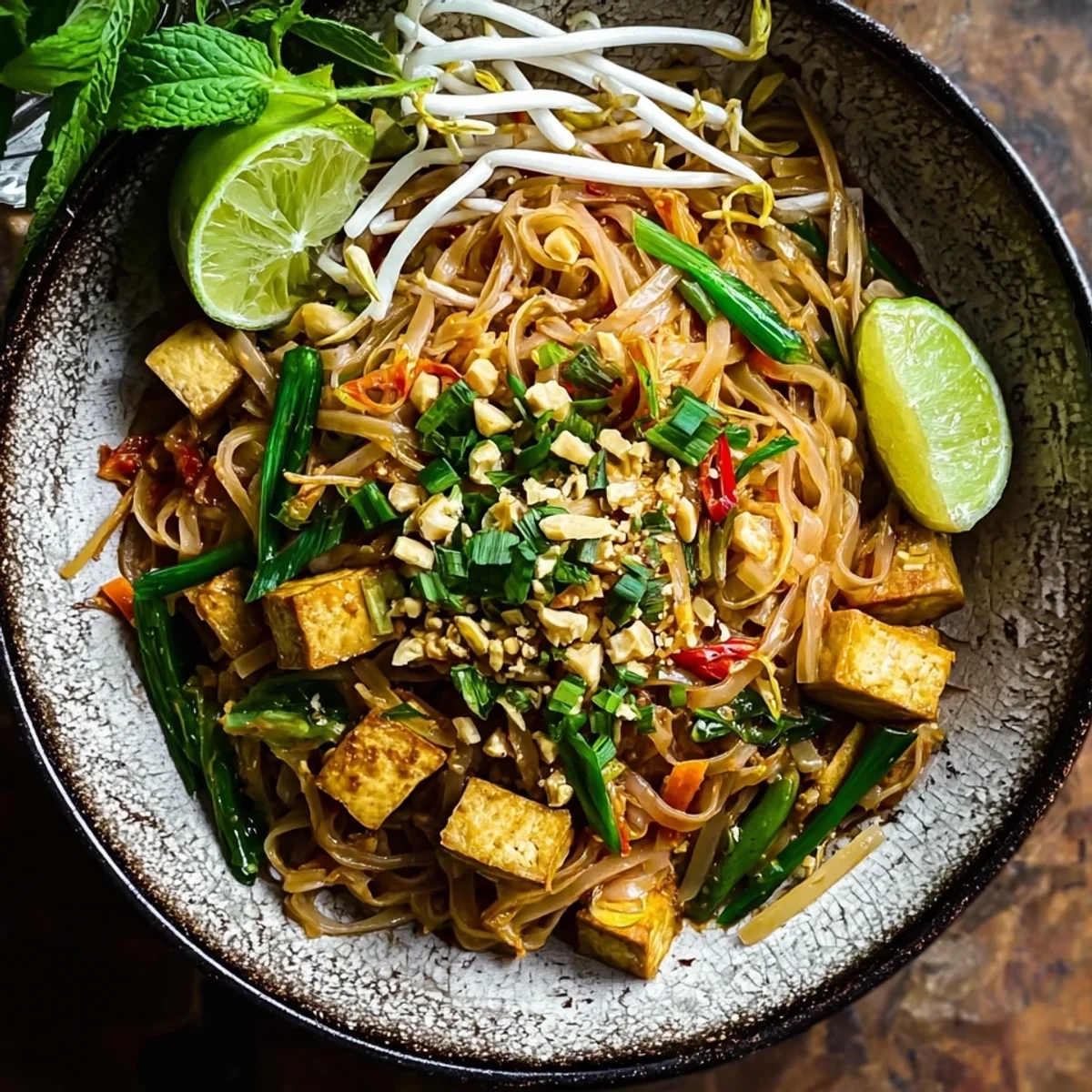
High protein tofu Pad Thai ready in 30 minutes. A plant-based dinner packed with flavor, rice noodles, and 25g protein per serving.
Okay, so real talk I stumbled onto this tofu Pad Thai recipe after a chaotic Tuesday where I had half a block of tofu, some sad-looking cabbage, and zero motivation to order takeout again. I threw things together, crossed my fingers, and honestly? It blew me away. Now it's my go-to weeknight dinner when I want something that feels fancy but takes less than 30 minutes. This one's a keeper, friends.
Oops okay, I have to tell you about the time I forgot to press the tofu. Like, completely forgot. Tossed it straight into the pan soaking wet, and it basically steamed itself into sad, soggy little cubes that fell apart everywhere. The sauce went watery, the noodles got mushy... it was a whole situation. Lesson learned, forever and always: press your tofu. Don't be past me.
Tofu Pad Thai: Ingredients That Make Every Bite Count
- 14 oz extra-firm tofu, pressed and cubed: This is the heart of the whole dish, honestly. Extra-firm tofu is the only kind worth using here it holds its shape, gets beautifully crispy on the outside, and soaks up all that gorgeous sauce. I press mine for at least 20 minutes using a clean towel and a heavy pan. Skip this step and you'll end up with mush, I promise. It's the move that separates a good tofu Pad Thai from a great one.
- 2 tbsp cornstarch: This little ingredient is my secret weapon and I will not stop talking about it. Tossing your tofu cubes in cornstarch before pan-frying gives them this incredible golden, slightly crispy coating that holds up even after you toss everything in sauce. I didn't expect that such a small amount would make such a massive difference, but here we are. Don't skip it it's the reason the tofu doesn't turn to mush in the pan.
- 3 tbsp tamarind paste: Tamarind paste is what gives Pad Thai its signature tangy-sweet depth, and to be real, there's no true substitute that nails it the same way. It's got this complex, slightly fruity sourness that balances out the soy sauce and brown sugar perfectly. I buy mine at the Asian grocery store and keep a jar in the fridge basically always. If you've never cooked with it before, this recipe is the perfect introduction you'll be obsessed.
- 8 oz flat rice noodles: Flat rice noodles are the classic choice for Pad Thai, and they're naturally gluten-free which is a bonus for a lot of folks. I soak mine in warm water instead of boiling them it keeps them from getting overcooked and gummy when you toss them in the hot wok later. They should still have a tiny bit of bite when you pull them from the soak. They'll finish cooking in the pan and absorb all that saucy goodness.
- 1 tbsp sriracha: Okay, I'll be honest I sometimes add a little more than one tablespoon because I like things spicy. But one tablespoon gives you this warm, building heat that doesn't overwhelm the dish. It plays so well with the tamarind and brown sugar, adding just enough edge to keep every bite interesting. Feel free to dial it back if you're cooking for little ones or spice-sensitive friends. The sauce is still incredible without the full amount.
- 1 tbsp sesame oil: Sesame oil is one of those ingredients that smells like pure magic the second it hits a warm pan. I use it to coat the tofu before crisping it adds this nutty, toasty flavor that weaves through the whole dish. A little goes a long way, so don't go overboard or it can get overwhelming. This is a finishing and cooking oil in one, and honestly, it's one of the things that makes this tofu Pad Thai taste like it came from a real restaurant.
How to Make Tofu Pad Thai Step by Step
- Step 1: Prep the Noodles:
- Start by soaking your flat rice noodles in warm water not boiling, just warm for about 20 to 25 minutes. You want them pliable and bendy but still with a little resistance when you bite one. I always test one before draining. They'll look almost done but trust the process they'll finish cooking when they hit the hot wok with the sauce. Drain them well and set aside. This step is low-key the most important foundation for a great tofu Pad Thai.
- Step 2: Mix Pad Thai Sauce:
- Whisk together the tamarind paste, soy sauce, brown sugar, sriracha, and rice vinegar in a small bowl until everything is smooth and combined. The smell at this point is honestly intoxicating tangy, savory, with that little spicy kick. Taste it! Adjust the sugar if you want it sweeter or add a splash more sriracha if you're feeling bold. Making the sauce ahead means you're not fumbling with bottles when things get hot and fast in the wok. This sauce is the soul of tofu Pad Thai.
- Step 3: Crisp the Tofu:
- Toss your pressed, cubed tofu with cornstarch, soy sauce, and sesame oil until every piece is lightly coated. Heat a non-stick skillet or wok over medium-high heat it should be properly hot before the tofu goes in. Lay the pieces in a single layer and don't touch them for a full 2 to 3 minutes. I know it's tempting, but patience here is everything. You'll hear that satisfying sizzle, and when you flip them, they should be golden and gorgeous. This crispy tofu is what makes tofu Pad Thai so satisfying and protein-packed.
- Step 4: Sauté Garlic & Cabbage:
- In the same pan don't you dare wash it, all those toasty bits are flavor toss in your garlic and let it sizzle for about 30 seconds until fragrant. Then add the cabbage and stir-fry it over high heat. You want it to get a little charred at the edges, not fully wilted and sad. This is where your kitchen starts smelling absolutely incredible. The garlic-cabbage combo adds this savory, slightly smoky base layer that makes the whole dish feel more complex and satisfying.
- Step 5: Toss Noodles & Sauce:
- Add your drained noodles to the pan with the cabbage, then pour that gorgeous sauce right over everything. Use tongs to toss it all together quickly the noodles will soak up the sauce fast and start to caramelize slightly against the hot pan. This is my favorite moment in making tofu Pad Thai, honestly. The color transforms from pale to this beautiful amber-brown, and the smell is just unreal. Keep things moving so nothing sticks, and work fast high heat is your friend here.
- Step 6: Add Tofu & Sprouts:
- Gently fold your crispy tofu back into the noodles along with a big handful of bean sprouts. The sprouts go in last so they keep a little crunch you don't want them completely limp. This is the moment your tofu Pad Thai really comes together as a complete dish. Every element is in the pan: chewy noodles, golden tofu, crunchy sprouts, all wrapped in that tangy-sweet sauce. Give it one final toss, taste for seasoning, and get ready to plate up something seriously beautiful.
Every time I make this, I'm reminded why cooking at home beats takeout. Standing over a hot wok, tossing noodles, smelling that tamarind sauce bubbling away it's genuinely fun. There's something so satisfying about watching plain tofu transform into golden, crispy little bites. This recipe makes me feel like I actually know what I'm doing in the kitchen, which, honestly, isn't always the case!
Storage Tips for Leftover Tofu Pad Thai
Store any leftover tofu Pad Thai in an airtight container in the fridge for up to 3 days. The noodles will absorb more sauce as they sit, so when you reheat, add a tiny splash of water or extra soy sauce to loosen things up. I reheat mine in a skillet over medium heat rather than the microwave it revives that texture so much better and even re-crisps the tofu a little. To be real, I've microwaved it in a pinch and it's still good, just a bit softer. I wouldn't recommend freezing this one rice noodles get really strange and mushy after freezing and thawing. The tofu texture also suffers. Make it fresh, eat it within a few days, and thank yourself later.

Easy Swaps and Substitutions for Tofu Pad Thai
Honestly, this recipe is super flexible and I've tested a lot of swaps over time. No tamarind paste? Mix 2 tablespoons of lime juice with 1 tablespoon of brown sugar it's not identical but it gets you close. Out of sriracha? Any chili garlic sauce works great. I've swapped the flat rice noodles for soba noodles and even zucchini noodles when I was feeling virtuous both work! For the tofu, tempeh is a fantastic high-protein substitute that gets even crispier. If you're not strictly plant-based, shrimp or chicken cook up beautifully with this same sauce. Cabbage can be swapped for bok choy, shredded carrots, or whatever veggies need using up in your crisper drawer. This recipe is genuinely forgiving make it your own!
Serving Tofu Pad Thai Like a Total Pro
I always serve tofu Pad Thai with a little garnish station on the table crushed peanuts, lime wedges, fresh cilantro, sliced green onions, and extra sriracha for the spice lovers. It makes the meal feel interactive and fun, especially when you've got people with different heat preferences. A simple cucumber salad on the side adds a cool, refreshing contrast to all that warm, savory noodle goodness. For drinks, I love an iced Thai tea or just sparkling water with lime. If you're hosting, this dish looks stunning served in a big bowl family-style with all the toppings scattered around it. People always go back for seconds every single time.
The Cultural Backstory of Pad Thai and My Tofu Twist
Pad Thai is one of Thailand's most iconic dishes, and its history is actually pretty fascinating. It was popularized in the 1930s and 40s as part of a national campaign to promote Thai identity and reduce rice consumption during a grain shortage. Street vendors across Bangkok made it famous, and it quickly became beloved worldwide. My personal connection to it started on a trip where I ate Pad Thai from a street cart at midnight and it completely changed how I understood Thai food. Creating this plant-based tofu version at home is my way of honoring that memory while making it accessible for everyday cooking. It's not perfectly traditional, but it carries that same spirit bold, balanced, and deeply satisfying.
This tofu Pad Thai has become one of those recipes I make on autopilot the kind that just feels like home. I hope it brings the same joy to your kitchen that it brings to mine! If you make it, please drop a comment below or tag me in your photos. I genuinely love seeing your versions, your swaps, your messy kitchens. Let's cook together, friends!

Your Burning Questions About Tofu Pad Thai, Answered
- → Can I make tofu Pad Thai ahead of time?
You can prep the sauce and press the tofu ahead of time, which cuts your cook time way down. But I'd recommend cooking the full dish fresh when you're ready to eat the noodles and tofu texture are just so much better straight from the pan. Leftovers are still great though!
- → How do I make this gluten-free?
Good news rice noodles are naturally gluten-free! Just swap the regular soy sauce for tamari or a certified gluten-free soy sauce, and you're all set. Everything else in this recipe is already gluten-free. I make it this way for gluten-sensitive friends all the time and nobody ever notices the difference.
- → My tofu won't get crispy what am I doing wrong?
Almost always it's one of two things: the tofu wasn't pressed long enough, or the pan wasn't hot enough. You need both! Press for at least 20 minutes, get your pan properly hot before adding the tofu, and don't move the pieces around. Patience is everything. Also make sure you're using extra-firm, not silken or soft.
- → Where do I find tamarind paste?
Most Asian grocery stores carry it, and it's increasingly available in the international aisle of larger supermarkets. You can also find it easily online. I buy a good-sized jar because once you start cooking with tamarind, you'll want it in everything. It keeps in the fridge for months!
- → Can I add more vegetables to this recipe?
Oh, please do! This recipe is so flexible. Bell peppers, shredded carrots, snap peas, mushrooms, bok choy all amazing additions. Just make sure to add heartier veggies earlier in the cooking process and more delicate ones toward the end. More veggies also means more servings, which is always a win.
High Protein Tofu Pad Thai
High protein tofu Pad Thai ready in 30 minutes. A plant-based dinner packed with flavor, rice noodles, and 25g protein per serving.
Ingredients
Crispy Tofu Base
- 14 oz extra-firm tofu, pressed and cubed
- 2 tbsp cornstarch
- 2 tbsp soy sauce
- 1 tbsp sesame oil
- 8 oz flat rice noodles
Savory Pad Thai Sauce
- 3 tbsp tamarind paste
- 3 tbsp soy sauce
- 2 tbsp brown sugar
- 1 tbsp sriracha
- 1 tbsp rice vinegar
Fresh Aromatics & Vegetables
- 4 cloves garlic, minced
- 1 cup shredded red cabbage
- 1 cup bean sprouts
- 3 green onions, sliced
- 2 tbsp neutral oil
Crunchy Protein Toppings
- 1/2 cup roasted peanuts, roughly chopped
- 1 lime, cut into wedges for garnish
- 1/4 cup fresh cilantro, for garnish
Instructions
-
1Prep the NoodlesSoak 8 oz flat rice noodles in warm water for 10-12 minutes until pliable but still slightly firm - they'll finish cooking in the wok. Drain and set aside. Properly soaked noodles are the secret to a perfectly textured High Protein Tofu Pad Thai that doesn't clump or turn mushy.
-
2Mix Pad Thai SauceIn a small bowl, whisk together 3 tbsp tamarind paste, 3 tbsp soy sauce, 2 tbsp brown sugar, 1 tbsp sriracha, and 1 tbsp rice vinegar until the sugar fully dissolves. Taste and adjust heat or sweetness to your preference. Set the sauce aside - you'll add it all at once later.
-
3Crisp the TofuToss 14 oz pressed and cubed extra-firm tofu with 2 tbsp cornstarch, 2 tbsp soy sauce, and 1 tbsp sesame oil until evenly coated. Heat 1 tbsp neutral oil in a large wok or skillet over medium-high heat and cook tofu for 3-4 minutes per side until golden and crispy. Remove and set aside.
-
4Sauté Garlic & CabbageAdd the remaining 1 tbsp neutral oil to the same wok over high heat. Add 4 cloves minced garlic and stir-fry for 30 seconds until fragrant. Add 1 cup shredded red cabbage and toss for 2 minutes until just softened. Keeping the wok hot ensures a proper stir-fry char for your High Protein Tofu Pad Thai.
-
5Toss Noodles & SauceAdd the drained rice noodles directly into the wok with the cabbage and garlic. Pour the prepared Pad Thai sauce over everything and toss vigorously using tongs for 2-3 minutes, ensuring every noodle strand is coated. If noodles stick, add 1-2 tbsp of water to loosen them up.
-
6Add Tofu & SproutsReturn the crispy tofu to the wok and fold it gently into the noodles. Add 1 cup bean sprouts and half of the 3 sliced green onions, tossing everything together for just 1 minute. Keeping the sprouts slightly crunchy adds a fresh contrast to this Quick Plant-Based Dinner that makes every bite satisfying.
-
7Plate & GarnishDivide your High Protein Tofu Pad Thai evenly among 4 bowls. Top each serving with 1/2 cup roughly chopped roasted peanuts, the remaining sliced green onions, and 1/4 cup fresh cilantro. Serve immediately with lime wedges on the side for a bright, citrusy finish that elevates the entire dish.
Notes
💡 Tofu Pressing Tip: For the crispiest tofu, press your extra-firm tofu for at least 30 minutes before cooking — wrap it in a clean kitchen towel and place a heavy pan on top. The drier the tofu, the better it crisps up in the wok.
🔄 Substitution Tip: No tamarind paste on hand? Mix 2 tbsp fresh lime juice with 1 tbsp Worcestershire sauce as a quick substitute. It won't be identical, but it delivers a similar sweet-tangy depth that works beautifully in this Quick Plant-Based Dinner.
🥡 Storage Advice: Store leftovers in an airtight container in the refrigerator for up to 3 days. Reheat in a hot skillet with a splash of water to revive the noodles. Note that the bean sprouts will soften over time, so add fresh ones when reheating for the best texture.
🍽️ Serving Tip: For an extra protein boost, serve this High Protein Tofu Pad Thai alongside a simple edamame side or top with a soft-boiled egg if you're not strictly vegan. A drizzle of chili oil at the table also adds a wonderful smoky heat for spice lovers.
Equipment
Please check ingredients for potential allergens and consult a health professional if in doubt.
Nutrition Facts
It is important to consider this information as approximate and not to use it as definitive health advice.
Comments
Leave a Comment